By Dan Smigrod, Managing Editor, Humanoid Home News
A home humanoid would need to stay useful long after its best demonstration. For a household, that means knowing who would repair it and how long its software would receive security updates. A demonstration alone does not answer those questions.
RoboSelect360’s November report takes a closer look at published support information. In a European-focused search covering 25 robots, the company says it examined 482 information points and found no published information for 284 of them, about 59%. Its figures were recounted on November 12, 2026.
The support findings add numerical detail to Humanoid Home News’ earlier coverage of what happens after the demo. The question now is how clearly providers describe the support that would follow a sale.
What the support search found
For selected questions, RoboSelect360 reported finding published information about:
- Warranty duration: 7 of 25 robots.
- Service contracts: 2 of 23.
- Response time: 1 of 15.
- End of software security support: 1 of 24.
- Parts availability after end of life: 0 of 16.
- Cost of updates: 0 of 18.
The denominators differ by question. These findings describe what RoboSelect360 says its searches located, not what every buyer would receive under a contract. Missing published information is not proof that support is absent.
The 59% figure therefore does not mean that 59% of robots lack a warranty or repair service. The European focus also matters: these results do not establish what support would be offered to a household in the United States.
Repair and software support need separate answers
Warranty duration is one part of the support picture. It does not, by itself, explain which repairs are covered or how long an owner might be without the machine. Those answers depend on the terms of the particular offer.
Software support needs a similarly precise commitment. A future update that adds a household skill is a different promise from a stated period of security updates. The report’s security-support finding concerns published information about when that support ends. It is not an independent test of a robot’s security.
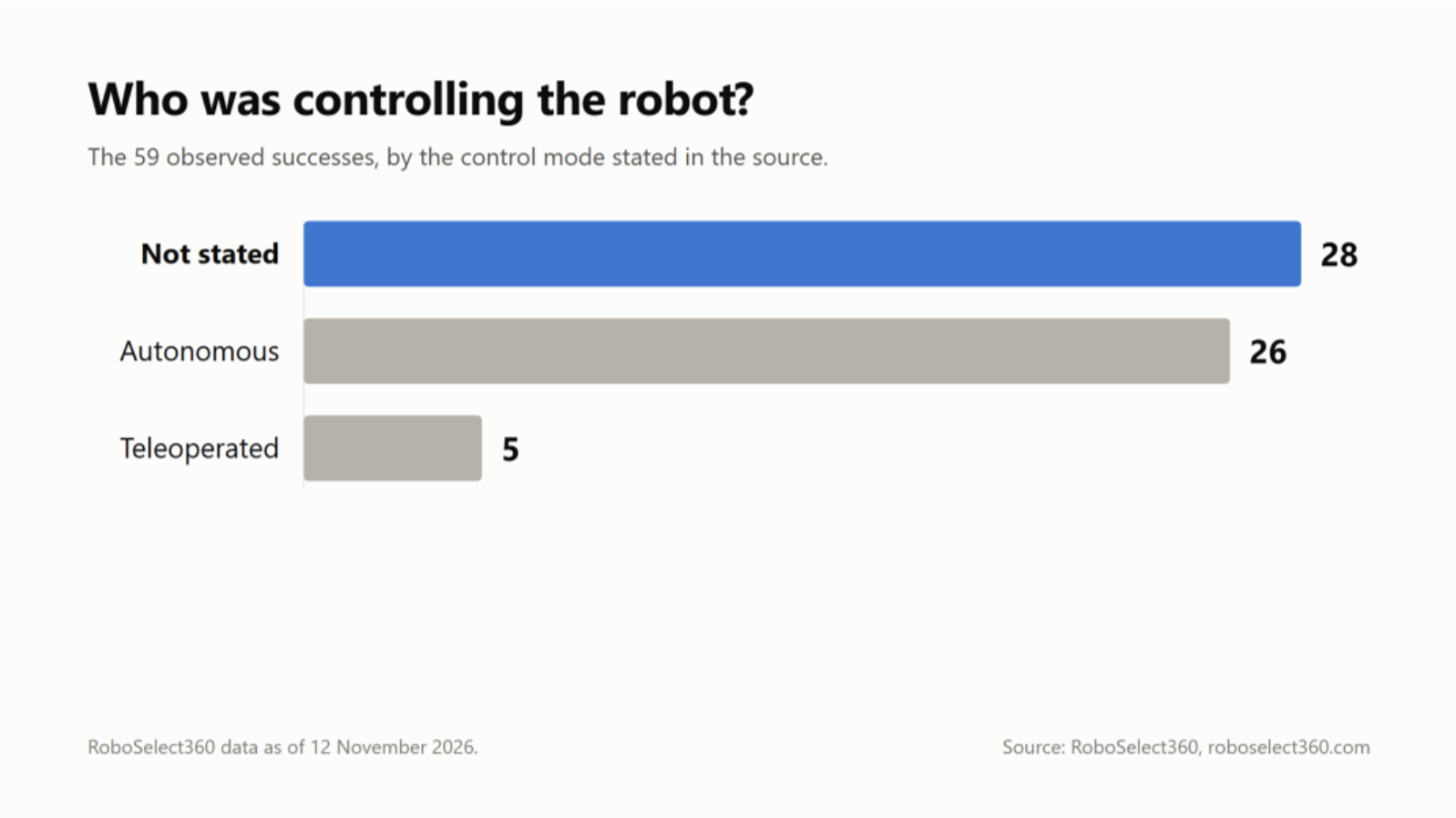
Delivered software matters, too. A task demonstrated with research software does not establish that the same function is included in the version a customer would receive. And when a demonstration does not disclose how the robot was controlled, its control mode remains unknown.
Useful findings, with limits
RoboSelect360 is a commercial robot-analysis and decision-support provider. It sells analysis products and data access, and says manufacturers do not fund or influence its analyses. Humanoid Home News has not independently audited its register or reproduced its individual support searches.
The findings describe the publisher’s selected sample. They are not a complete census of home humanoids. Nor does the report establish that any listed robot is ready for household purchase or use.
For someone following the development of home humanoids, the support audit draws attention to commitments that a task demonstration cannot verify. A useful skill and a clear plan for keeping the machine working are separate parts of a future household offer.
HHN (Humanoid Home News Takeaway:) A demonstration can show a skill. It cannot substitute for clear commitments about repairs and software security support. RoboSelect360’s findings identify gaps in published information within its European-focused sample, not proof that support is unavailable.